What does working with Lisa actually look like?
Diagnose - Align - Build - Sustain
School improvement doesn't usually fail because people aren't working hard enough.
The problem is that the pieces aren't always working together.
I work with principals to understand what's getting in the way, decide what needs to change, build the capability and systems to make it happen, and then check that the change is actually showing up in practice.
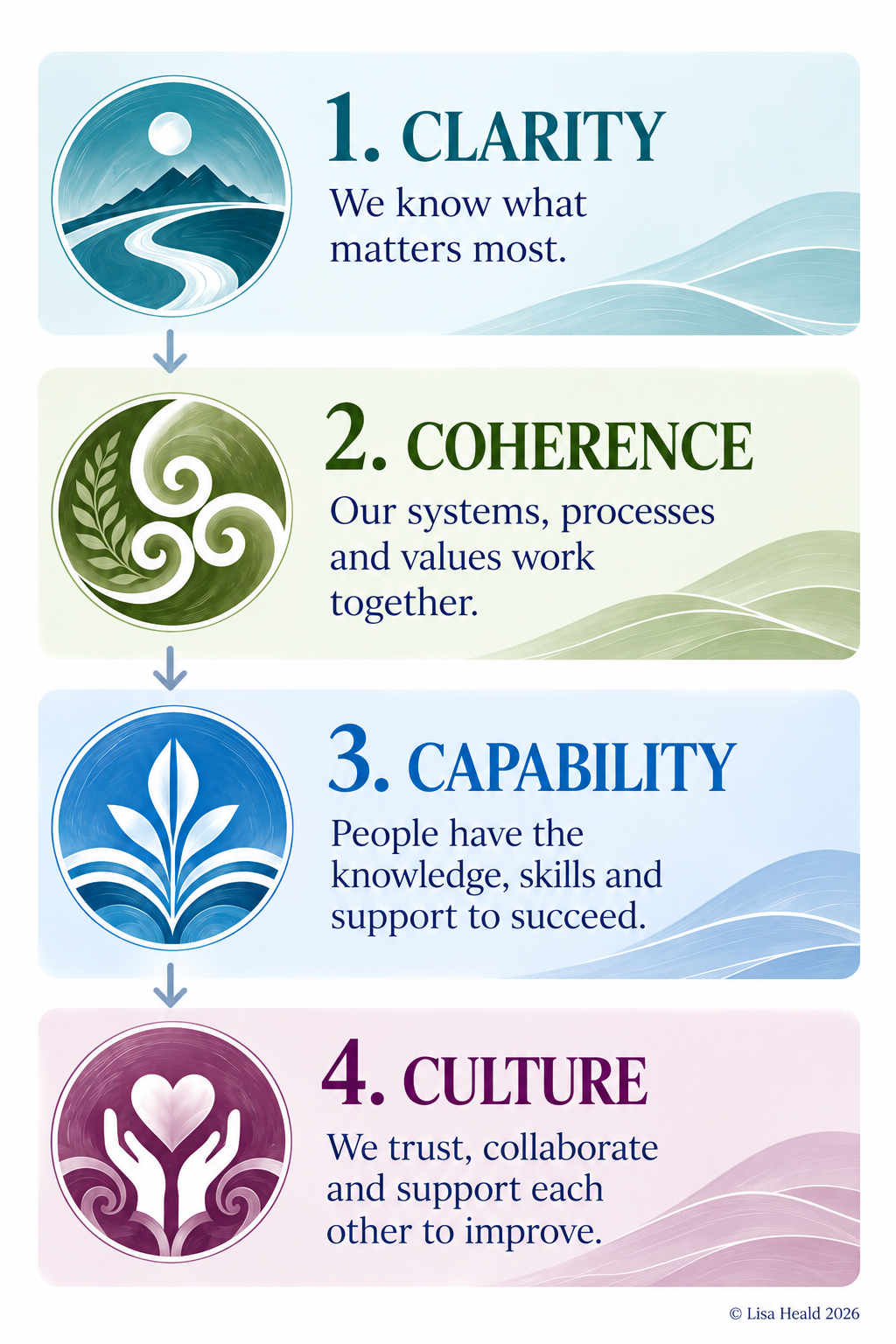
I use the 4Cs to understand what is happening across the school and where the greatest leverage sits.
We can start wherever the problem is.
Sometimes you know exactly where things are stuck.
Sometimes you know something isn't working, but you can't quite put your finger on what.
Either way, we start by getting clear about what we're dealing with.
1. Diagnose
Find out what's really getting in the way.
We look at the school through the 4Cs: Clarity, Coherence, Capability and Culture.
The aim isn't to produce another report. It's to identify the few things that are most affecting your ability to get the progress you want.
2. Align
Decide what matters now.
We turn the findings into a focused action plan.
What needs to change? What comes first? Who needs to do what? What will we see if it's working?
3. Build
Build the capability, practice and systems to make the change happen.
This is where I draw on the right combination of coaching, professional learning, modelling, resources, leadership development and system improvement.
The aim is to build your people's capability, not create dependence on me.
4. Sustain
Check that the change is actually sticking.
We come back to the evidence.
What's changed? What's showing up in practice? What's still getting in the way? What needs to be adjusted?
And it all has to reach the classroom
The purpose isn't to have a beautifully aligned school on paper.
It's to create the conditions for consistent quality teaching and learning.
That's where the rubber hits the road.
Quality Practice → Student Impact
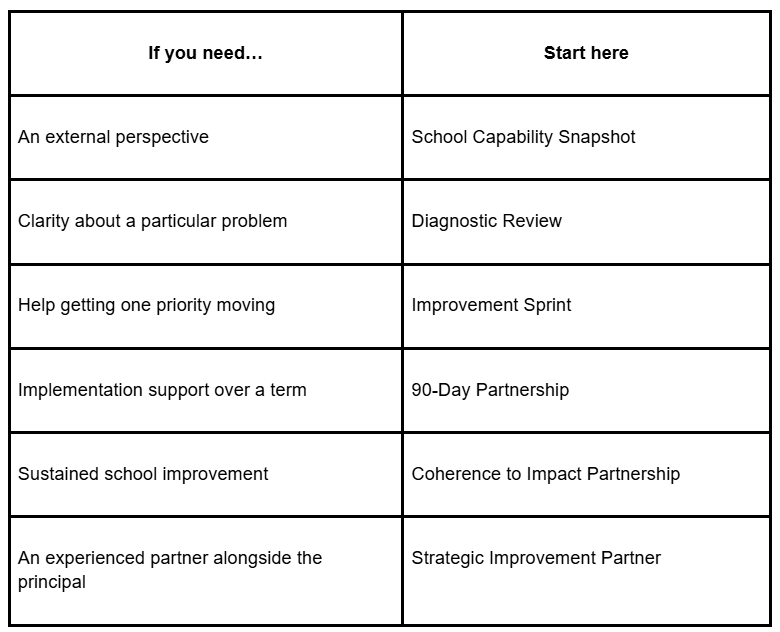
Choose where you need to start….